
 aviarai
 Why African Poultry Farmers Need Local Intelligence, Not Guesswork
Key Takeaways: At a Glance
- The Disconnect: African poultry farmers possess ample data and experience, yet still lack real-time clarity at the exact moment daily decisions must be made.
- The Financial Reality: Because feed represents 70% to 85% of total production costs, every single daily feeding decision is inherently a high-stakes financial decision.
- The Silent Leak: The cost of overfeeding or mismanaging rations is invisible in the short term; it doesn’t hit the bank account as an immediate crisis, but compounds over weeks into major margin losses.
- Information vs. Intelligence: Traditional spreadsheets, dashboards, and imported benchmarks only summarize the past. Decision intelligence interprets what the data means for the flock today.
- Stabilize vs. Optimize: Relying on intuition and rigid guidelines might allow a farm to stabilize operations, but local, context-aware decision intelligence is required to truly optimize and stay competitive.
By now, the pattern should be clear.
African poultry farmers are not short on effort.
They are not short on records.
They are not short on experience.
What they are short on is clarity when a single wrong decision can quietly erase profit.
Every day, farmers decide how much to feed, whether to adjust rations, how to interpret a dip in production, and when to intervene. These decisions shape costs, bird health, and profitability more than any single strategic plan.
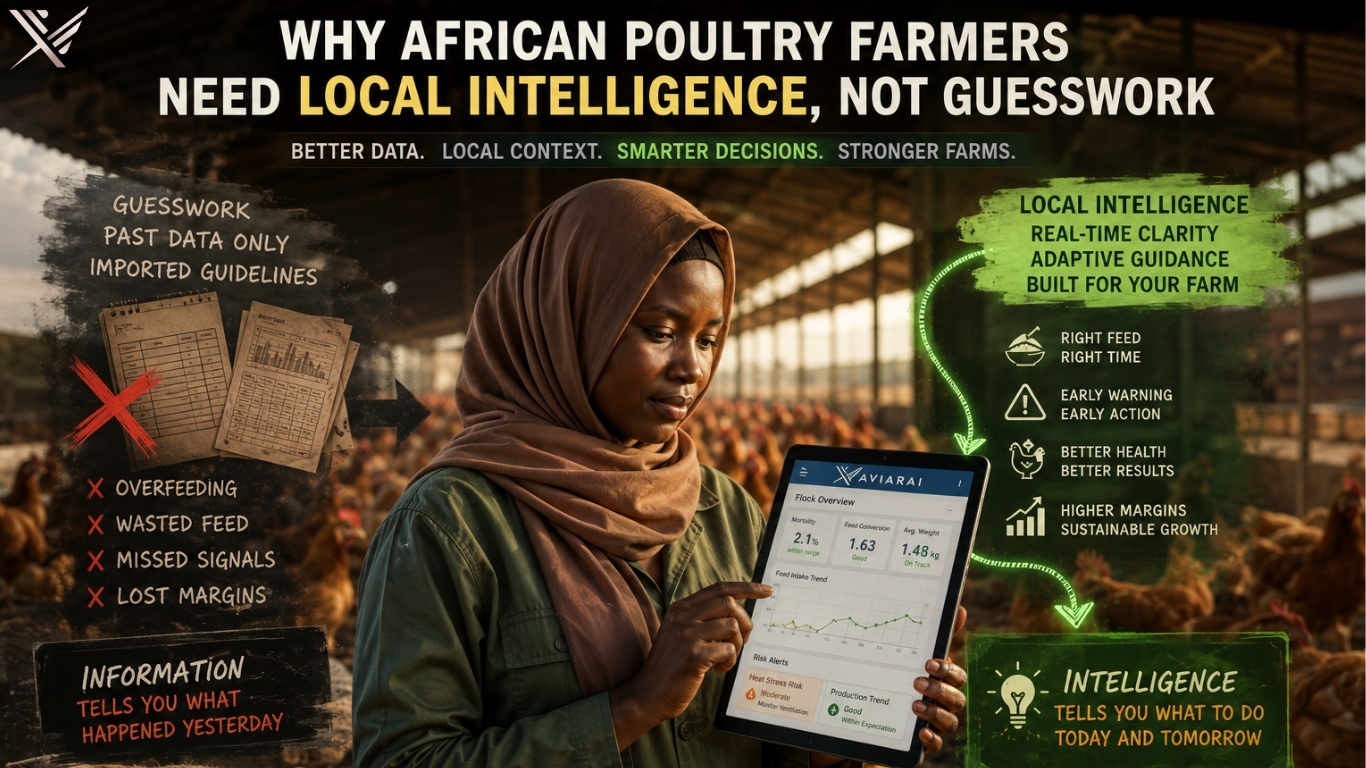
Yet most farms still operate with information that describes the past, not intelligence that guides the present. Poultry farmers operate with generalized guidelines or recommendations that have not considered the current conditions of the flock.
This is where decision intelligence enters the conversation.
What Decision Intelligence Actually Means
Decision intelligence is not automation. It does not replace farmers. And it is not about rigid rules.
At its core, decision intelligence is the ability to turn raw local data into context-aware guidance.
It connects what happened yesterday with what is normal for birds of this age, in this environment, on this feed. It recognizes patterns across time, not just snapshots. And it highlights when small deviations matter, before they become expensive problems.
In practical terms, decision intelligence answers the questions farmers actually ask:
- Is today’s feed level still right, or should it be adjusted?
- Is this production dip within expectation, or an early warning?
- Is the farm performing well for its conditions, or quietly underperforming?
These are not questions that spreadsheets or static dashboards can answer reliably.
These are not questions imported guidelines can answer.
Why Information Alone Falls Short
Information tells you what happened. Intelligence tells you what it means.
Most poultry farm management tools stop at record keeping. They show charts. They report averages. They summarize yesterday.
But farming decisions are forward-looking.
The cost of a wrong decision is rarely immediate.
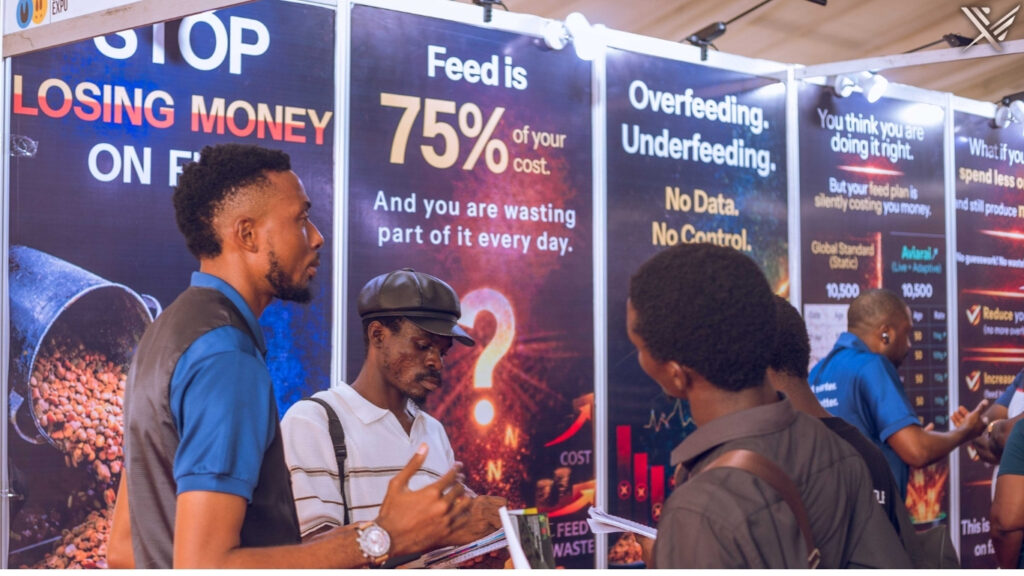
Because feed represents 70 to 85% of production costs, every feeding decision is a financial decision.
Even a mistake of 1 gram here, 2 grams there can silently become a devastating financial loss. Unfortunately, the cost of overfeeding is not immediately present in your bank account. It appears days or weeks later, when the chance to act early has passed. This delay is what makes decision intelligence so important.
Without it, farmers are forced to choose between overreacting and doing nothing. Neither is optimal.
Decision Intelligence Respects Human Judgment
One common fear is that intelligence systems will replace human expertise.
The opposite is true.
Decision intelligence exists to support judgment, not override it. It provides context, flags risk, and suggests options. The farmer remains in control.
In fact, the most effective systems are those that combine local data-driven insight with farmer experience, allowing decisions to be made earlier, more confidently, and more specific to the flock.
This partnership between human intuition and machine intelligence is where sustainable improvement comes from.
Why This Shift Matters Now
The volatility facing African poultry farmers is not temporary.
Feed prices will continue to fluctuate. Climate variability will increase. Market pressure will intensify. Margins will remain thin.
In this environment, intuition without intelligence becomes fragile. Decisions made blindly, even by experienced farmers, carry growing risk.
Decision intelligence is not a luxury. It is becoming a requirement for farms that want to remain competitive, resilient, and profitable. Without decision intelligence, farmers can stabilize but not optimize.
The Beginning of a New Operating Model
The shift from record-keeping to decision intelligence represents a deeper change than adopting a new tool.
- It changes how farmers think about daily operations.
- It replaces anxiety with foresight.
- It turns uncertainty into manageable risk.
Most importantly, it allows farms to learn continuously, rather than repeating the same inefficient cycles every production period.
In the next phase of this conversation, we will explore what it takes to build decision intelligence that truly reflects African farming realities. We will show why this intelligence must be local, adaptive, and accessible to have real impact.