Most commercial poultry layer farms that are losing money do not do so because of one single catastrophic disaster. Instead, they bleed cash through dozens of tiny, daily inefficiencies that compound over time. A few extra grams of wasted feed. A slight spike in cracked eggs. A few percentage points below realistic production targets. A subtle increase in mortality.
Category: Farm Economics & Performance
Farm Economics & Performance focuses on the financial drivers of commercial poultry farming, including feed costs, profitability, mortality, production efficiency, and operational decision-making.
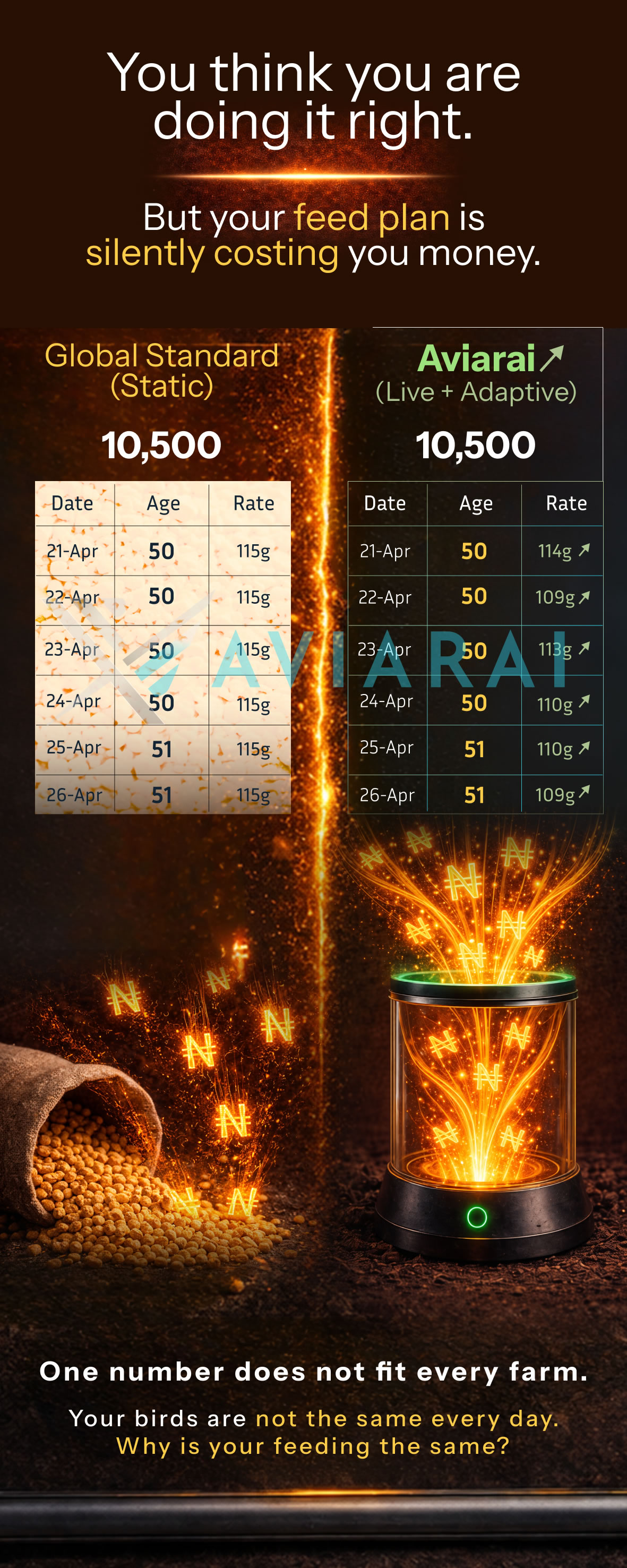
Why Relying on “One Feed Plan” Is Quietly Destroying Your Poultry Profits
The assumption is simple: “If the birds are at this age, the daily feed should stay the same.” But poultry production does not work that way. Your birds are not identical every day. Your farm conditions are not identical every day. And your profitability definitely does not stay the same every day.
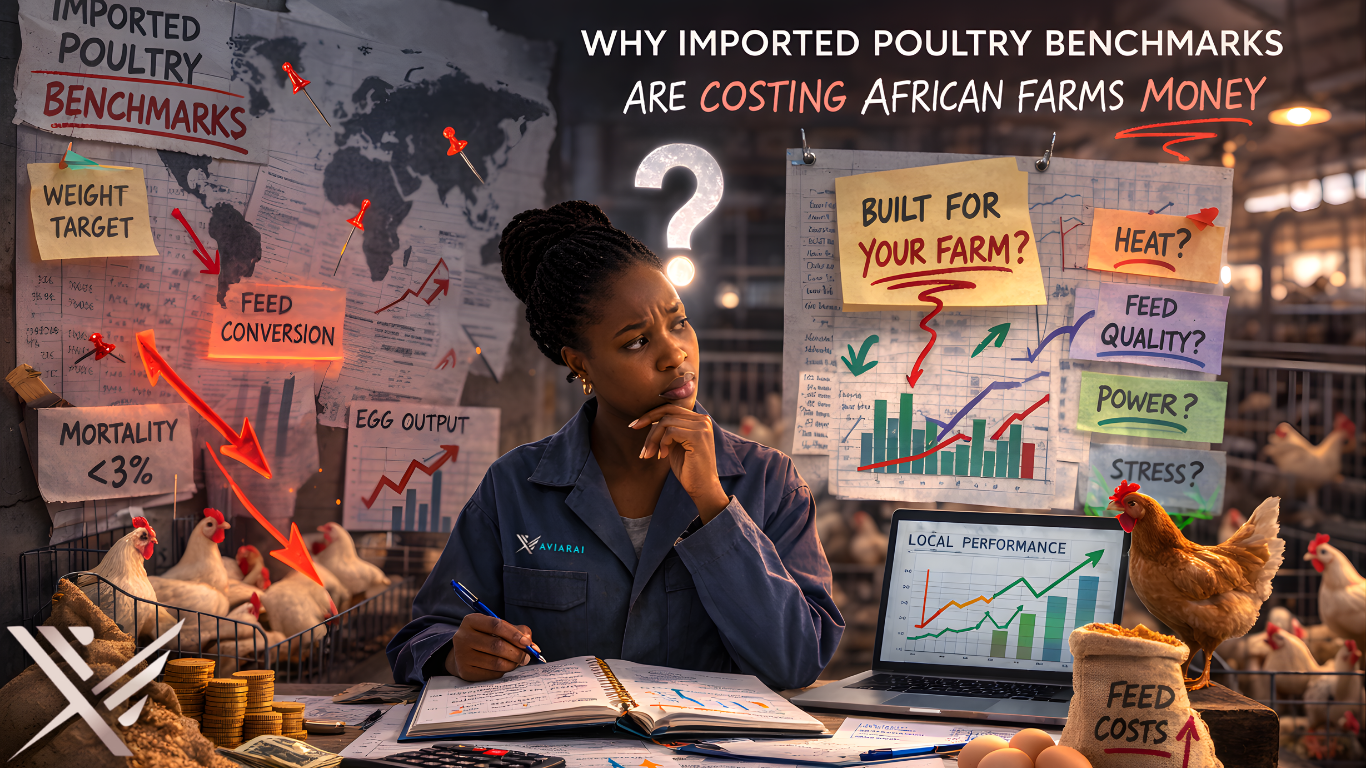
The Benchmark Trap: Why Imported Poultry Benchmarks Are Costing African Farms Money
Across Africa, poultry farmers are measured against poultry benchmarks and numbers that were never designed for them. Age-specific weight targets, Target feed conversion ratios, Standard mortality thresholds, Expected egg production curves.
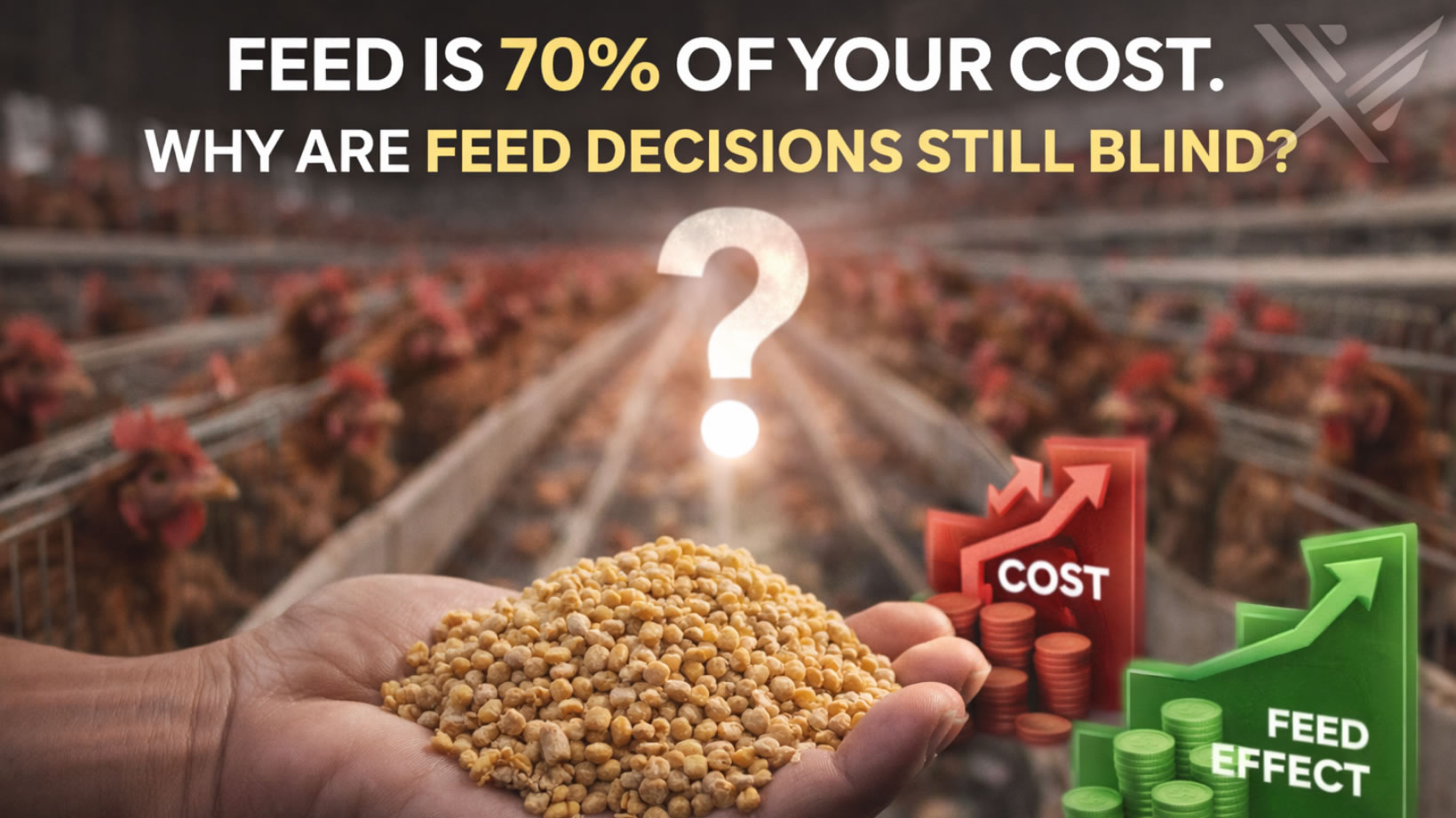
The Most Expensive Decision Poultry Farmers Make Without Knowing It
If you ask any poultry farmer where most of their money goes, the answer is immediate. Feed. In most African poultry operations, feed accounts for 70 to 85 percent of total production costs. No other input comes close. Housing, labor, vaccines, electricity, and logistics all matter. But feed largely determines whether a farm survives or struggles. Yet despite this reality,
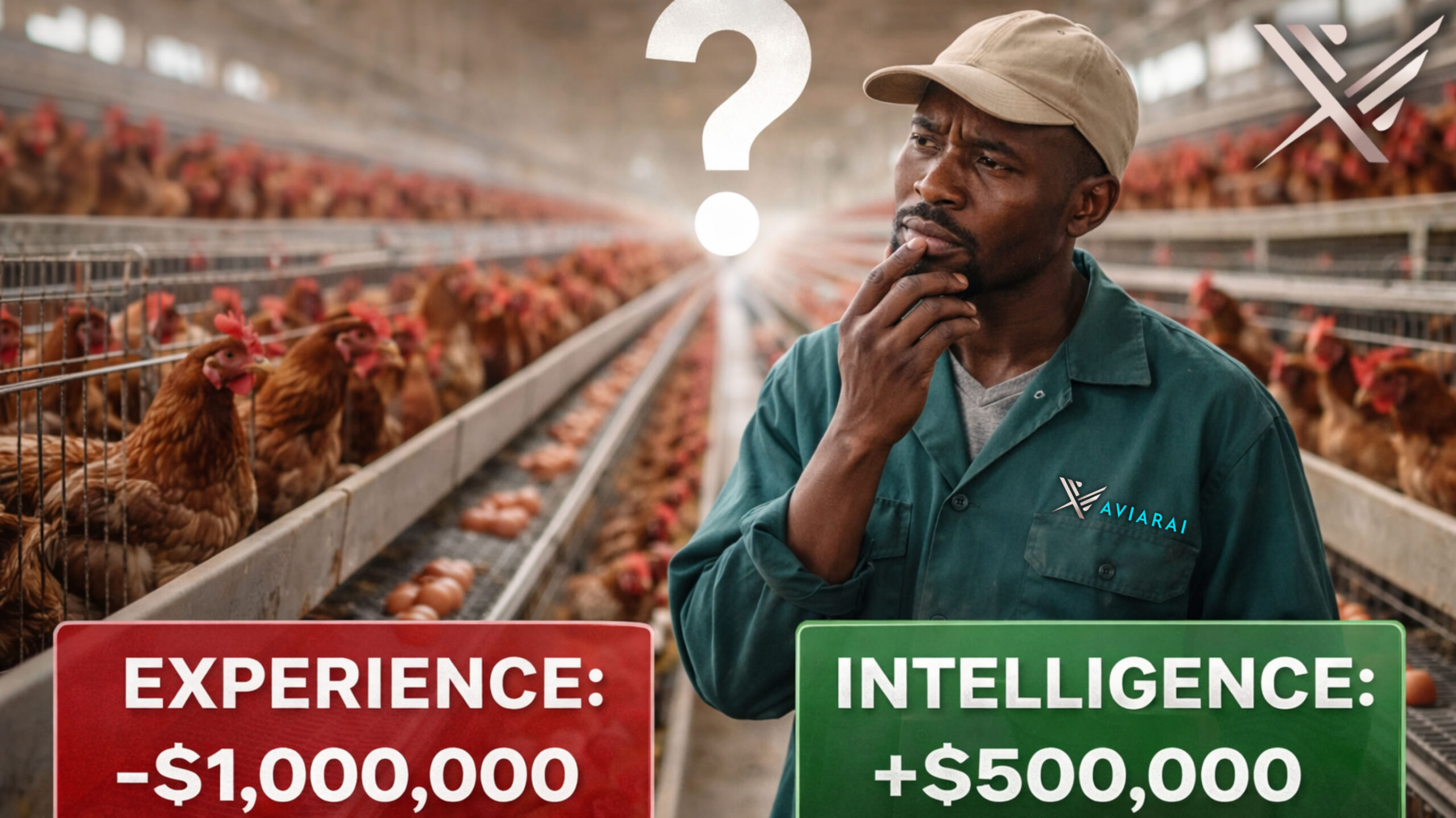
This One Error Is Costing African Poultry Farmers Billions
For decades, African poultry farmers have relied on experience, instinct, and hard-earned intuition to run their farms. And for a long time, that made sense. Feed prices were relatively stable. Input shocks were slower. Competition was more predictable. When conditions changed, farmers adapted using judgment passed down from mentors, veterinarians, and years of trial and error. That approach built today’s