

 aviarai
 Why Is My Commercial Poultry Layer Farm Losing Money?
Key Takeaways: At a Glance
✓ Feed is your biggest expense.
For most commercial layer farms, feed accounts for 75% to 85% of total production costs, making even small feed inefficiencies extremely expensive.
✓ A 4-gram feed leakage can cost millions.
On a 10,000+ bird layer farm, reducing feed consumption by just 4 grams per bird per day while maintaining production can save nearly ₦15 million per flock cycle.
✓ The wrong benchmark can hide profit opportunities.
Comparing your flock to neighboring farms or generic breed standards may be misleading. Performance should be measured against farms operating under similar environmental and management conditions.
✓ Small losses compound into major profit leaks.
Overfeeding, cracked eggs, excess mortality, and underperformance often appear insignificant individually but can collectively destroy a farm’s profitability over time.
✓ Data-driven farms outperform intuition-driven farms.
The most profitable poultry farms are not necessarily the farms with the best birds. They are the farms that identify inefficiencies early, make data-driven decisions, and act before small problems become costly mistakes.
The Short Anwer
Most commercial poultry layer farms that are losing money do not do so because of one single catastrophic disaster. Instead, they bleed cash through dozens of tiny, daily inefficiencies that compound over time.
A few extra grams of wasted feed. A slight spike in cracked eggs. A few percentage points below realistic production targets. A subtle increase in mortality.
Individually, these losses seem insignificant. Combined, they can quietly destroy a farm’s entire profitability. The real challenge? Most farmers never see them happening until it is too late.
Feed: The Largest Cost On Your Farm
For most commercial layer operations, feed accounts for approximately 75% to 85% of total production costs. This means even a microscopic feed inefficiency will have a massive financial impact on your bottom line.
While many farmers focus almost exclusively on negotiating a lower feed price, far fewer focus on reducing actual feed waste. Yet hidden waste often costs significantly more than market price fluctuations.

A Real-World Example From The Field
Let’s look at the actual data from a real flock pilot at Petros Farms.
Flock Profile: 10,477 birds entered production at 16 weeks and remained in production until 118 weeks of age.
During this full cycle, the flock consumed a total of 708,470 kg of feed. With regional feed prices averaging approximately ₦12,500 per 25 kg bag (₦500 per kg), this single flock consumed a staggering ₦354,235,000 worth of feed.
Now, look at the power of data-driven optimization:
4 g × 10,477 birds × 714 production days = 29,916 kg of feed saved
29,916 kg × ₦500/kg = ₦14,958,000 saved
By identifying inefficiencies and reducing feed consumption by just 4 grams per bird per day while maintaining steady egg production, a farm can save nearly ₦15 million from just one flock. That is the power of data-driven feeding decisions.
The 5 Hidden Profit Leaks Destroying Your Margins
1. Overfeeding (The Mirage of More)
Many farmers assume that if their birds are eating more, they must be producing more. Unfortunately, poultry biology does not work that way. Once a layer meets her baseline nutritional requirements for body maintenance and egg output, any additional feed is simply wasted. The farm spends more money, but egg production remains entirely flat, egg mass stays unchanged, and body weights begin to exceed regional standards.
2. Egg Production Below Realistic Potential
Many farmers compare their flock’s performance either to neighboring farms or to breed manual targets. Both can be misleading.
Breed standards are developed under specific conditions that may not reflect your local environment, management practices, farm size, climate, feed quality, or disease challenges. The most meaningful benchmark is one that accounts for the realities of your operation.
Aviarai analyzes data from farms operating under similar conditions to provide a performance benchmark tailored to your farm. This helps you understand what is realistically achievable and where opportunities for improvement exist.
For example, if a 10,000-layer farm operates at an 85% hen-day production rate while Aviarai’s contextual benchmark suggests that 90% is realistically achievable under that farm’s specific conditions, this gap may appear small on paper.
In reality, it represents 500 fewer eggs every day. Over the course of a production cycle, that missed opportunity can translate into millions of naira in lost revenue. By identifying realistic, farm-specific performance targets, Aviarai helps farmers focus on improvements that have a measurable impact on profitability.
3. The Cracked Egg Tax
Profitability does not depend on the number of eggs your birds lay. It depends on the number of clean, intact eggs you can actually sell. A seemingly acceptable crack rate of 2.5% on a farm producing 8,500 eggs daily results in 213 cracked eggs every single day. That is more than 6,000 unmarketable or discounted eggs every month. What appears to be a minor operational issue is actually a silent profit leak draining revenue from the farm every day.
4. Excess Mortality
Every mortality reduces both current cash flow and future earning capacity. Each bird that dies has already consumed feed, vaccines, labor, housing, and management resources, yet will never produce another egg.
Some mortality is inevitable in any commercial layer operation, especially during extended production cycles. The real problem occurs when mortality quietly rises above what is expected for farms operating under similar conditions.
For a 10,000-layer farm, even a modest increase in mortality can translate into hundreds of lost birds, thousands of lost eggs, and significant lost revenue over the life of the flock.
5. Flying Blind (Data Without Insight)
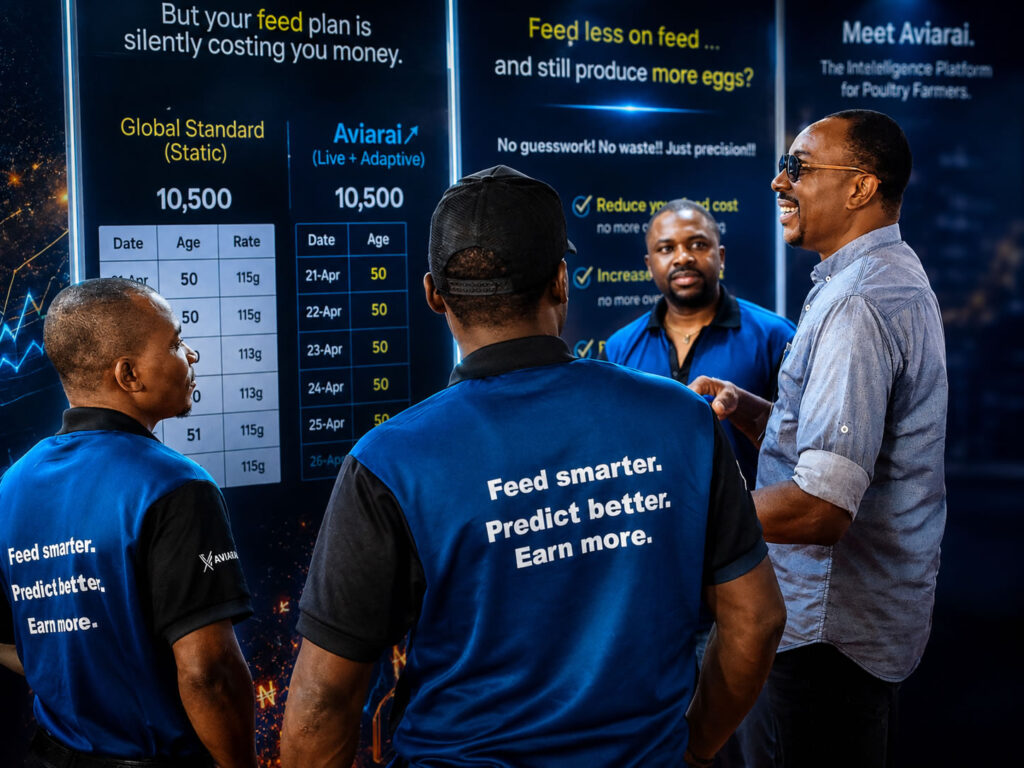
The single biggest profit leak on a modern poultry farm is not knowing exactly where losses are occurring. Many farms diligently record feed consumption, egg production, mortality, and expenses on paper or in spreadsheets. The problem is not data collection. The problem is turning that data into timely, actionable intelligence.
The Future Of Poultry Profitability
The commercial farms that will thrive in the next decade will not necessarily be the farms working harder. They will be the farms that:
- Use local data intelligence to identify a 4-gram feed leakage before it becomes a multi-million-naira loss;
- Detect declining performance before revenue suffers; and
- Act on emerging problems before they become crises.
The question should not be:
“Why is my layer farm losing money?”
The question should be:
“Do I have the tools to know exactly where my money is being lost today?”

Take Control Of Your Farm Today
Stop managing your poultry farm through guesswork and delayed reporting. Let local data-driven intelligence calculate your flock’s requirements, identify early warning signs, benchmark your performance against similar farms, and help protect your profit margins automatically.